

Precon comparison ·  Modern Horizons 3 Commander
Which Modern Horizons 3 Commander precon should you buy?
Tricky Terrain is the one to play as it ships, with the lowest curve in the set and three cards that change what its lands tap for. Creative Energy is the one to upgrade: its guide spent the least and cut the curve the most, though Farewell keeps it at Bracket 3. Graveyard Overdrive is for self-mill, and Eldrazi Incursion, the heaviest of the four, is for Eldrazi.
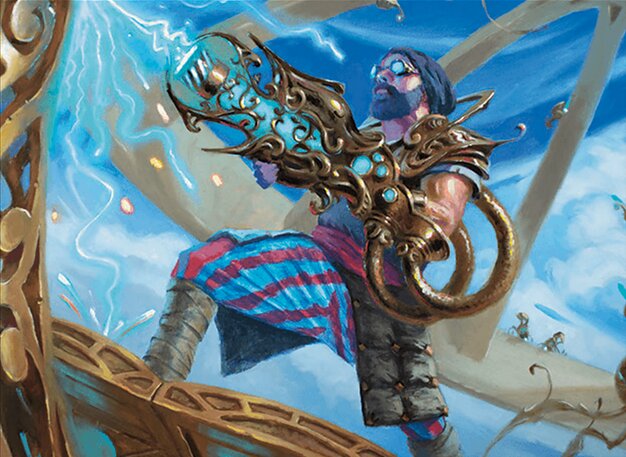
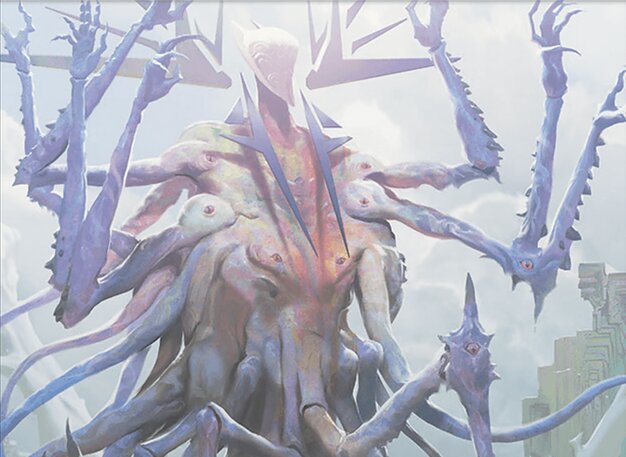
Art, left to right: Aaron Miller, Alex Konstad, Jana Schirmer and Alex Brock
Modern Horizons 3 Commander came out on 14 June 2024 as four decks, the same day as the Modern Horizons 3 expansion. Each deck also had a Collector's Edition with an identical decklist, every card in foil, so everything below covers both versions. None of the eight had a suggested retail price from Wizards, which stopped listing one for any Commander deck after February 2019 and started again in November 2024, so the deck pages on this site make no call on whether a box was worth what it cost, and neither does this one. The guides do let me set the boxes side by side on how each serves its commander and what each guide had to buy. Here's the deck I'd hand each kind of buyer:
- Tricky Terrain (green and blue), for anyone who'll play it unchanged. Its curve averages 3.56, the lowest of the four, and three cards in the box change what its lands tap for: Yavimaya, Cradle of Growth, Dryad of the Ilysian Grove and Omo herself. It also holds Dark Depths and Thespian's Stage, two lands that make a 20/20 flier together. What it gets wrong is speed: 14 of its 44 lands enter tapped, 13 of them every time.
- Creative Energy (white, blue and red), to upgrade. Fifteen swaps in its guide cost $19.86 at September 2026 market prices, less than half of what any other guide spent, and they lower the curve more than any other, from 3.85 to 3.28. Check one card before a Bracket 2 game: Farewell is a Game Changer, which makes it the one box here with a bracket floor.
- Graveyard Overdrive (black, red and green), if milling your own library is the appeal. Disa puts a Lhurgoyf card onto the battlefield whenever one reaches your graveyard from anywhere but the battlefield, and only eight cards in the 99 are Lhurgoyfs. Maskwood Nexus, which ships in the same box, makes every creature card you own a Lhurgoyf while it's off the battlefield, and the guide's plan starts from keeping it.
- Eldrazi Incursion (all five colours, on a commander with none), for Eldrazi. It's the heaviest box, averaging 4.43 with 13 nonland cards at seven mana or more. Its guide cuts six of those and adds seven Eldrazi, because each Eldrazi spell you cast is another chance for Ulalek to copy everything.
Singles value, swaps and the set's one bracket floor
| Deck, commander and bracket floor | Singles value | Upgrade guide |
|---|---|---|
   Creative Energy Satya, Aetherflux Genius Bracket 3 | $76.45 | 15 swaps |
  Eldrazi Incursion Ulalek, Fused Atrocity No floor | $164.76 | 13 swaps |
| Graveyard Overdrive Disa the Restless No floor | $100.67 | 13 swaps |
| Tricky Terrain Omo, Queen of Vesuva No floor | $148.87 | 13 swaps |
Singles value is the TCGplayer market price of the printings each box shipped, summed, as of 23 October 2026. It moves every day, and each deck’s own page carries the current figure. Wizards of the Coast published no suggested retail price for any of the four. It stopped listing them in February 2019 and did not resume until November 2024, so there is no release price to set these totals against. The bracket floor is the lowest bracket the box can honestly claim before anyone changes a card. Each deck also came as a Collector’s Edition, the same hundred cards in foil.
Buy one sealed on TCGplayer
Each button opens that deck’s sealed listing on TCGplayer, at today’s market price rather than its release price. Affiliate link: we may earn a commission on purchases.
Two commanders that copy, and the trigger each copy skips
Satya and Ulalek are both copy engines, and they copy different things. Satya, Aetherflux Genius copies a creature. Each time she attacks, you make a token of another nontoken creature you control that comes in tapped and attacking, and you get two energy. When the next end step begins, the token is sacrificed unless you spend energy matching its mana value. Ulalek, Fused Atrocity copies the stack. Cast an Eldrazi spell, pay {C}{C}, and you copy every spell you control, then every other activated or triggered ability you control.
Each copy misses one kind of trigger, and not the same kind. A creature put onto the battlefield already attacking was never declared an attacker, which means an ability that fires when it attacks does nothing on Satya's token. A copy of a spell is created on the stack rather than cast, so a copied Eldrazi never sets off a when-you-cast ability of its own. Ulalek makes up part of that, because it also copies the cast trigger the original spell put on the stack, as long as you stack Ulalek's ability above it.
So the two boxes reward different cards. Of the 26 creatures behind Satya, 10 have an ability that triggers as they enter, which the token gets, and 8 have one that triggers when they attack, which it doesn't. Two have both. In Eldrazi Incursion, 10 cards carry a cast trigger for Ulalek to double, and a copied creature spell resolves into a token that stays for good, where Satya's goes at the end step unless you pay for it. Both guides buy along those lines. Satya's adds two creatures that do their work on arrival, Palace Jailer and Charming Prince, and Ulalek's adds seven Eldrazi, six of them at five mana or less.
What each commander charges after the first cast
Satya and Ulalek send a bill every time they work. Satya's is energy. Her attack pays two, and keeping the copy costs its mana value, so a two-drop copy keeps for nothing and anything dearer draws on what you've stored. Ulalek's is {C}{C}, and that symbol asks for colourless mana in particular, so a land that only taps for colours can't pay it. 28 of the 38 lands in Eldrazi Incursion can make colourless mana, which is why its guide leaves the mana base almost alone.
Disa the Restless and Omo, Queen of Vesuva ask for nothing once they're down. Both of Disa's abilities are free triggers, and Omo's comes whenever she enters or attacks. What those two need is supply: Lhurgoyf cards reaching Disa's graveyard, and lands reaching the battlefield for Omo's deck to use. Most of their guides' swaps go there. Ten of Graveyard Overdrive's thirteen are Lhurgoyfs or ways to fill the graveyard, and Tricky Terrain's buy extra land drops in Oracle of Mul Daya and Azusa, Lost but Seeking, mana from each land in Lotus Cobra, and four new lands.
The printed costs lean the same way. Omo is the cheapest commander here at three mana, and her single coloured symbol is green or blue, so either colour casts her. Each of Ulalek's five symbols is colourless or one colour, so it can be cast entirely with colourless mana. Satya at four and Disa at five need one mana of every colour they carry.
Twenty-two tapped lands survive the guides, and two decks keep 18
By their guides' counts the four boxes ship 36 tapped lands, and after every guide's swaps 22 are left. Where they're left is the interesting part. 18 of the 22 are in Graveyard Overdrive and Tricky Terrain, the two decks whose lands do a job besides making mana:
- Creative Energy drops from six to one, fewer than any other deck keeps. Its guide takes out all three Temples and both bounce lands and keeps only Mystic Monastery.
- Eldrazi Incursion drops from four to three. Its guide's one land swap trades Temple of Silence for Sanctum of Ugin, which comes in untapped and taps for the colourless mana the copies want.
- Graveyard Overdrive drops from twelve to nine, and four of the nine cycle. Canyon Slough, Sheltered Thicket, Tranquil Thicket and Forgotten Cave can each become a card in the graveyard on a turn you'd rather have a spell. Dakmor Salvage dredges and Raging Ravine turns into a creature.
- Tricky Terrain drops from fourteen to nine, counting Lair of the Hydra, which comes in untapped only while you control one other land or none. The nine it keeps include Simic Guildgate, Cloudpost and three Deserts, each a type something in the deck counts, and the cuts include the three tapped Caves that nothing in the deck counts.
The land counts move less. Tricky Terrain ships 44 and its guide keeps 43, five more than any other deck before or after the swaps. Graveyard Overdrive goes from 39 to 37, and the other two stay at 38.
My buying order, with the reason for each
The order below assumes you'll play the deck a while before changing much of it. If you mean to upgrade before the first game, move Creative Energy to the front.
Tricky Terrain: the lowest curve, on the slowest lands
Whenever Omo enters or attacks, she puts an everything counter on up to one target land and up to one target creature. A land with the counter has every land type, basic and nonbasic, and a nonland creature with one has every creature type. The box gives the land half plenty to do. By its guide's census it runs five Deserts, three Gates, all three Urza lands and three Locus lands, each counted by something in the 99, and Planar Nexus has every nonbasic land type before Omo touches it.
It also carries a finisher made of two lands. With Dark Depths on the battlefield, Thespian's Stage can pay {2} and tap to become a copy of it, and because a copy has no ice counters, it's sacrificed at once and you get Marit Lage, an indestructible 20/20 token with flying. Six more cards in the box find or copy one of the pair: Vesuva, Copy Land, Expedition Map, Sylvan Scrying, Ulvenwald Hydra and Hour of Promise. It doesn't set a bracket floor, and nothing else in the box does either, but it's worth a word before the game starts.
Thirteen swaps in its guide cost $55.82 in September 2026, priced at TCGplayer market on default printings, and a little over half of that is two cards, Azusa and Heroic Intervention. They cut the tapped lands from 14 to nine and lower the curve to 3.09 from 3.56, and buy nothing for colour, since Dryad of the Ilysian Grove alone makes every land you control tap for green or blue. That's the box I'd open first: slow lands cost it turns, but its colours, its commander and its finisher all work from the box.
Creative Energy: the smallest bill, and the one Game Changer
Satya rewards creatures that do their work as they arrive, and the box gives her ten of those against eight whose payoff comes on the attack, a split its guide spends a whole section on. The bigger gaps it finds are elsewhere: a curve of 3.85 with three eight-drops, six lands that enter tapped every time, and little that can answer a single problem permanent.
The guide's fifteen swaps cost $19.86 in September 2026, on default printings at market price. Five of the fifteen are lands at $1.93 between them. The first two it buys are removal that brings its own energy, Galvanic Discharge and Harnessed Lightning. The new lands replace the three Temples and both bounce lands with two filter lands that never enter tapped and three check lands that come in untapped whenever you control a land of the right basic type. Three eight-drops become one, two seven-drops become none, and the curve falls from 3.85 to 3.28, the biggest drop of the four.
Two things don't change. Red stays at 23 sources, and the guide puts double red on turn three at 66.7%, with five cards still asking for it. And Farewell stays. It's on the Game Changers list, so the box is Bracket 3 as it ships and after its swaps, the only one in the set with a floor. Take Farewell out and nothing else in the 99, or among the fifteen adds, sets one.
Graveyard Overdrive: eight Lhurgoyfs, and one artifact that makes more
Disa has two abilities. Whenever a Lhurgoyf permanent card reaches your graveyard from anywhere but the battlefield, she puts it onto the battlefield, and whenever your creatures deal combat damage to a player, you create a Tarmogoyf token. The box is built on the first ability, and it's the hard one to trigger. Its 99 holds eight Lhurgoyf cards, six creatures plus Tarmogoyf Nest and Altar of the Goyf.
Maskwood Nexus changes the count. Its second sentence gives every creature card you own every creature type while it's anywhere but the battlefield, so with the Nexus out, any creature card you mill reaches the graveyard as a Lhurgoyf. Its guide makes keeping it the first recommendation and builds the thirteen swaps around milling more, and more often: three more Lhurgoyfs, six cards that fill the graveyard turn after turn, and Buried Alive. By its own figures, a three-card mill finds a Lhurgoyf 22.5% of the time in the box as it ships and 75.9% in the upgraded list once the Nexus is out.
Its thirteen swaps cost roughly $51 at market prices in September 2026. They take the curve from 3.72 to 3.34 and the lands from 39 to 37, three fewer of them tapped, and they cut The Reaver Cleaver, which was the box's most valuable card when the guide was written. I rank it third because, as it ships, Disa's best ability waits on eight cards out of 99 and on one artifact turning up.
Eldrazi Incursion: thirteen cards at seven mana or more
Ulalek's box is the heaviest in the set, averaging 4.43 mana value, with 13 nonland cards costing seven or more. Its guide argues that the problem is less the dear cards than the missing cheap ones. Casting two Eldrazi in one turn and paying {C}{C} for each needs Eldrazi at four mana or less, and the guide counts 13 of those in the box.
Its thirteen swaps cost about $47 on default printings at September 2026 market prices, roughly $20 of it Urza's Incubator, which makes every creature spell of the type you name cost {2} less. Six of the cuts cost seven mana or more, and six of the seven Eldrazi it adds cost five or less. The curve ends at 3.89, the second-biggest drop after Creative Energy's and still the heaviest list here once every guide is applied.
For a buyer who won't change a card, that's why it comes last: it has the most cards that are hard to cast, and only 13 Eldrazi cheap enough to cast two in a turn. Its five-colour identity is the other side of that, as the next section shows.
Ulalek takes all five colours, and the others share one apiece
Ulalek's colour identity is all five colours, so every card in the other three boxes is legal in Eldrazi Incursion. That's less use than it sounds, since Ulalek copies only when you cast an Eldrazi spell. Cards travel better the other way: 45 of Eldrazi Incursion's 93 cards that aren't basic lands have no colour in their identity at all, so they fit any Commander deck.
The other three pair off by one colour each. Creative Energy and Graveyard Overdrive share red, Creative Energy and Tricky Terrain share blue, and Graveyard Overdrive and Tricky Terrain share green.
Otherwise the four have little in common. Command Tower, Sol Ring and Arcane Signet are in every box, nothing is in exactly three, and the twelve cards in exactly two are nine lands, two Talismans and Burnished Hart. Eldrazi Incursion and Graveyard Overdrive overlap the most, nine cards counting those three. Tricky Terrain shares nothing but the three with Creative Energy, and nothing but the three with Graveyard Overdrive.
No card turns up in two guides' adds, and only two adds already come in another of the four boxes, as a matched pair. The Eldrazi Incursion guide adds Lightning Greaves, which comes in Graveyard Overdrive, and the Graveyard Overdrive guide adds Llanowar Wastes, which comes in Eldrazi Incursion. Neither guide cuts the card the other one wants, so owning both lets you try either add before buying it, at the cost of a gap in the deck you took it from.
If you're buying two, my first two picks overlap as little as any pair in the set. Tricky Terrain and Creative Energy share one colour, blue, and no cards beyond the three in every box.
FAQ
Which of the Modern Horizons 3 Commander decks holds up best without any swaps?
Tricky Terrain. Its curve averages 3.56, the lowest of the four, and three cards in the box add colours to its lands: Dryad of the Ilysian Grove and Yavimaya, Cradle of Growth to all of them, and Omo to one land each time she enters or attacks. What it pays for that is tempo, since its guide counts 14 tapped lands among its 44. Graveyard Overdrive has the next-lowest curve, at 3.72, but Disa's main ability waits on one of eight Lhurgoyf cards reaching the graveyard.
What would it take to play Creative Energy at Bracket 2?
Taking out one card. Farewell is a Game Changer, which Bracket 2 doesn't allow, and nothing else in the box or among its guide's fifteen adds is one, so without Farewell the list sets no floor at all. The guide keeps it, so the upgraded deck is still Bracket 3. One more card is worth raising before the game either way: Gonti's Aether Heart, which you can exile for eight energy to take an extra turn.
Which Modern Horizons 3 deck is cheapest to bring up to strength?
Creative Energy, by a wide margin. Its guide spent $19.86 on fifteen swaps, on default printings at September 2026 market prices. The other three guides, written the same month, spent about $47 on Eldrazi Incursion and $55.82 on Tricky Terrain, both at market for default printings, and roughly $51 on Graveyard Overdrive at market prices. Two of those bills lean on very few cards: Urza's Incubator is about $20 of Eldrazi Incursion's, and Heroic Intervention and Azusa, Lost but Seeking make up a little over half of Tricky Terrain's.
Was there a suggested retail price for the Modern Horizons 3 Commander decks?
No. Wizards of the Coast listed no suggested retail price for Commander decks from February 2019 until November 2024, and the Modern Horizons 3 decks arrived in June 2024, in the middle of that gap, Collector's Editions included. So the deck pages here show today's value of the singles without judging the price anyone paid, and this page does the same.
Can Eldrazi Incursion borrow cards from the other Modern Horizons 3 decks?
Any of them. Ulalek's colour identity is all five colours, so every card in the other three boxes is legal in its deck, though few do much there because Ulalek copies only when you cast an Eldrazi spell. Its guide adds one of them, Lightning Greaves, which ships in Graveyard Overdrive. Lending works too, since 45 of Eldrazi Incursion's 93 cards other than basic lands have a colourless identity and fit in any of the others.
How is a Modern Horizons 3 Collector's Edition different from the regular deck?
The hundred cards are the same, in different printings. Every card is ripple foil, each commander and the other new legend in its deck are borderless, and in three of the four decks the thirteen other cards new to Modern Horizons 3 Commander are extended art. Eldrazi Incursion's new cards had no extended-art printing, so they keep the regular frame. Each edition has its own deck page: Creative Energy, Eldrazi Incursion, Graveyard Overdrive and Tricky Terrain.